


What nutrients are contained in watermelon rind?
According to the U.S. Department of Agriculture (USDA), one cup of diced watermelon rind, equivalent to 150g, provides approximately 29 calories, 1g of protein, 2g of fiber, 408mg of potassium, 11mg of vitamin C, and 45µg of folate.
"Fiber can aid digestion, while potassium contributes to the normal functioning of muscles and the nervous system," shares nutritionist Lauren Manaker (USA).
Watermelon is also one of the richest sources of citrulline, an amino acid that can help lower blood pressure. According to Ms. Manaker, the rind contains more citrulline than the flesh. The rind makes up about 30% of the watermelon's weight. Therefore, utilizing both the rind and the flesh significantly reduces food waste, according to Verywellhealth .
Here are 5 ways to prepare watermelon rind to add to your menu.
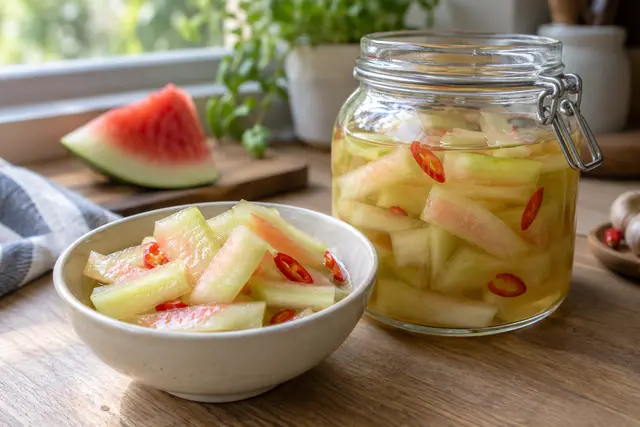
Have you soaked the watermelon rind yet?
ILLUSTRATIVE IMAGE: C.ANH CREATED BY GPT
Pickled
Pickled watermelon rind can be served with salads, sandwiches, or cold cuts and cheese dishes. After cooking and pickling, the finished product is stored in a sealed glass jar and refrigerated for up to two weeks.
Experts advise washing watermelons thoroughly before cutting them to avoid transferring bacteria or dirt from the rind to the inside.
Fry
If you don't use all the watermelon rind for pickling, you can use it in a stir-fry. The rind is crunchy and has a flavor similar to cucumber, adding a unique touch to the dish.
"Sautéing quickly with a little oil and seasoning helps soften the watermelon rind, making it easier to digest. Shorter cooking times also help minimize the loss of heat-sensitive nutrients like vitamin C," Ms. Manaker explained.
Make smoothies
Fresh or frozen watermelon rind can be added to smoothies to supplement fiber and potassium. To prepare it for later use, you can blend watermelon rind with berries and herbs, then pour the mixture into ice cube trays to freeze.

Fresh or frozen watermelon rind can be added to fruit smoothies.
ILLUSTRATIVE IMAGE: C.ANH CREATED BY GPT
Eat raw
Watermelon rind is crunchy and can be used as a snack or side dish. A cup of watermelon flesh contains only about 0.6g of fiber, so utilizing the rind is a way to increase your fiber intake. However, the rind isn't as sweet as the flesh, so not everyone likes it.
Cooking soup
Diced watermelon rind can add crunch to soups, stews, or spicy casseroles. In the summer , you can also try making a cold soup, a recipe that uses both the flesh and the rind, making the most of the watermelon.