


Every modern car is made up of thousands of parts, many of which users rarely pay attention to during use. The small hole at the bottom of a car door is one example. This detail appears on many car models, in the form of a small round hole or groove usually located along the bottom edge of each car door.
At first glance, some might think this is a design flaw or a missing detail like a screw… However, this small hole actually plays a crucial role in water drainage in a car.
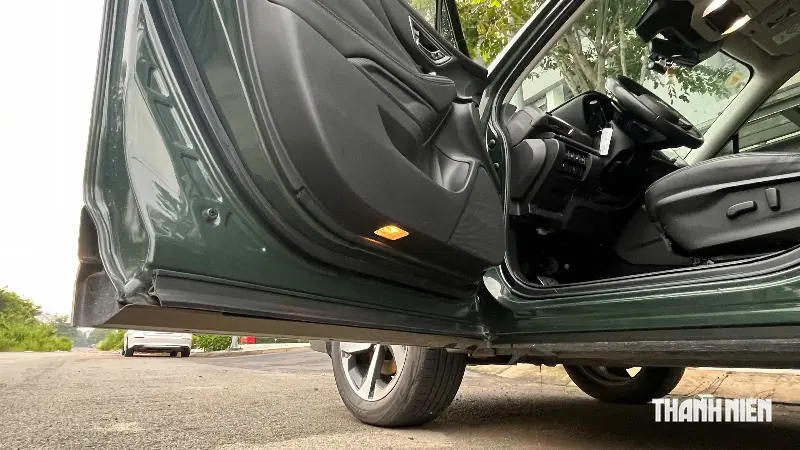
Below the edge of each car door, there are usually small holes or grooves.
Photo: TRAN HOANG
The small hole below the edge of the car door is for draining water.
At first glance, car doors may seem like simple components of the vehicle body, protecting the interior. However, the inside of each car door is not a completely sealed compartment. During use, water can enter the door through various points, especially in the window seal area.
When the user lowers the window, water clinging to the glass surface can seep down into the door. Additionally, rainwater or water from car washing can also leak through the gaps, edges of the door seals, and the window lifting mechanism. This water is then drained to the bottom of the door. Here, small holes below the edge of the door function to expel the water instead of allowing it to accumulate inside.
Typically, manufacturers place one or more drainage holes along the bottom edge of the door. Depending on the car model's design, these holes may be circular, oval, or narrow slits.
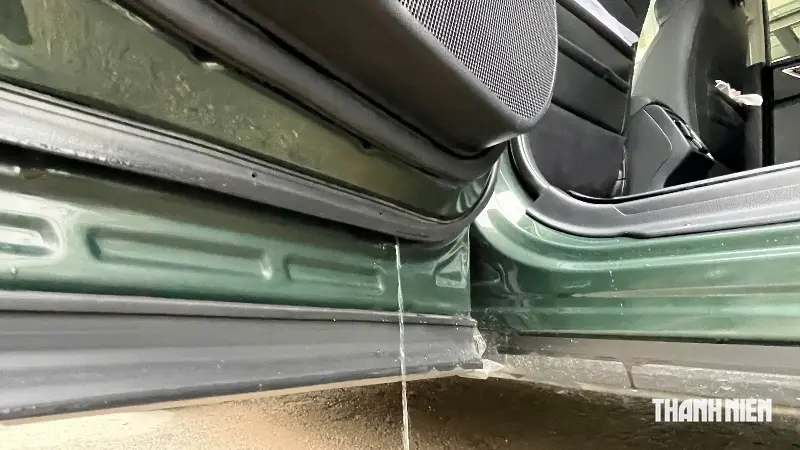
The small holes below the edge of the door are designed to allow water to drain out instead of accumulating inside.
Photo: TRAN HOANG
According to automotive technicians, this is a simple but essential detail because if water is not drained away, its long-term accumulation can create a favorable environment for metal corrosion and also affect some internal door components such as wiring and speakers.
Why does water still leak through the door even with a rubber seal?
A common question among many car owners is: even though car doors have rubber seals, how can water still get inside?
In reality, the rubber seal on car doors primarily serves to prevent water, dust, noise, and wind from entering the interior. The seal is not designed to make the entire door a completely airtight seal. Specifically, the window area needs a gap for the glass to move up and down. Therefore, during rain or car washes, a certain amount of water can still seep down the window surface. This is also why manufacturers design a drainage system at the bottom of the door.
According to Mr. Nguyen Van Hung, a technician working at an auto garage in Ho Chi Minh City, users shouldn't worry too much about water leaking from the bottom of the rear door after washing their car or driving in the rain. "This phenomenon of water leaking from small holes or gaps under the car door after driving in the rain or washing the car is very normal. The concern isn't whether water gets inside the door or not, but whether the water drains out properly," Mr. Hung added.
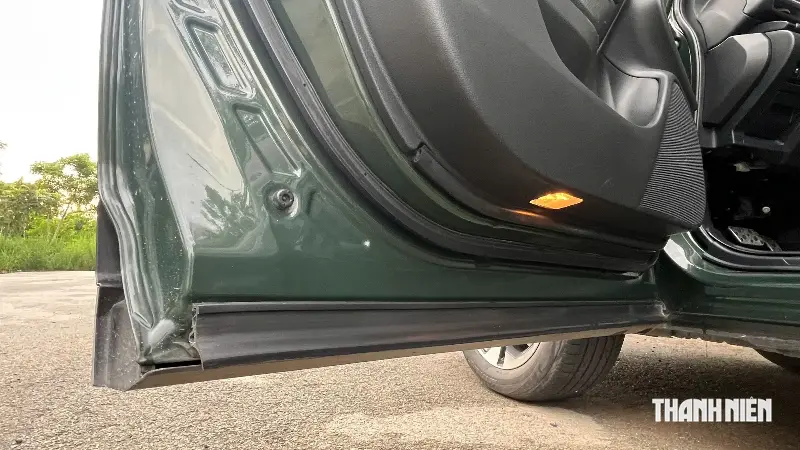
If you regularly wash your car or drive in the rain but don't see water draining from the small hole under the edge of the car door, that's something to worry about.
Photo: TRAN HOANG
According to Mr. Hung, users can easily check by observing the area at the bottom edge of the rear door after washing the car. If water flows out from these holes, the drainage system is still working. It's only concerning if you frequently wash your car or drive in the rain but don't see water draining from the small holes at the bottom edge of the car door.
Should you use a sharp object to clear the drain hole under the door frame?
Typically, after a period of use, the drain holes in car doors can become clogged with mud, dirt, or leaves. This is more likely to happen with cars that frequently travel in dusty environments or are parked under trees.
When a drain is found to be clogged, some people have a habit of using wire, nails, or sharp objects to poke directly into the small hole under the door edge. However, this is not a recommended solution.
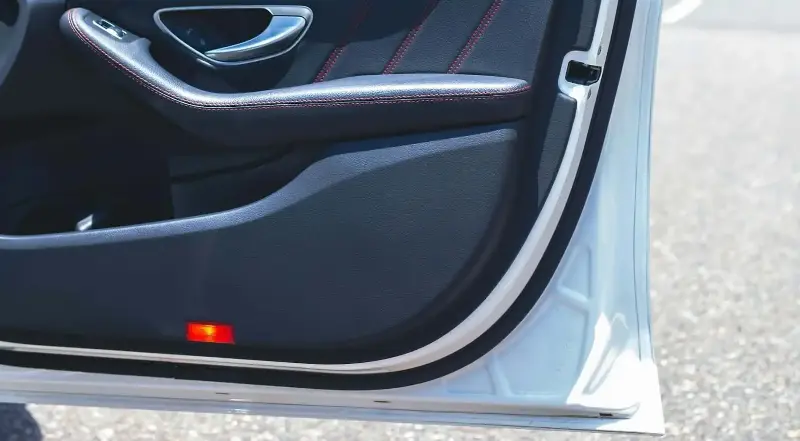
Typically, after a period of use, the drain holes in car doors can become clogged with mud, dirt, or leaves.
Photo: MOTOR1
Mr. Nguyen Van Hung suggested that users can clean this area, but should do so gently, avoiding using overly hard or sharp objects to insert deep inside. "Behind the drain hole may be parts of the window lifting mechanism, electrical wires, or other components. If a sharp object is used forcefully, users could damage the paint, the anti-corrosion coating, or affect the internal components of the door," Mr. Hung cautioned.
A simpler method is to clean any mud or dirt clinging to the drain opening with a cloth or suitable tool. If you suspect a deep blockage in the drain, especially if water cannot drain out or there are signs of water pooling inside the drain, you should take your vehicle to a repair shop for inspection.