



Thank goodness Apple seems to have lifted its informal moratorium on cinemas playing its films, because watching Tenzing on an iPhone would surely count as a crime against cinema.
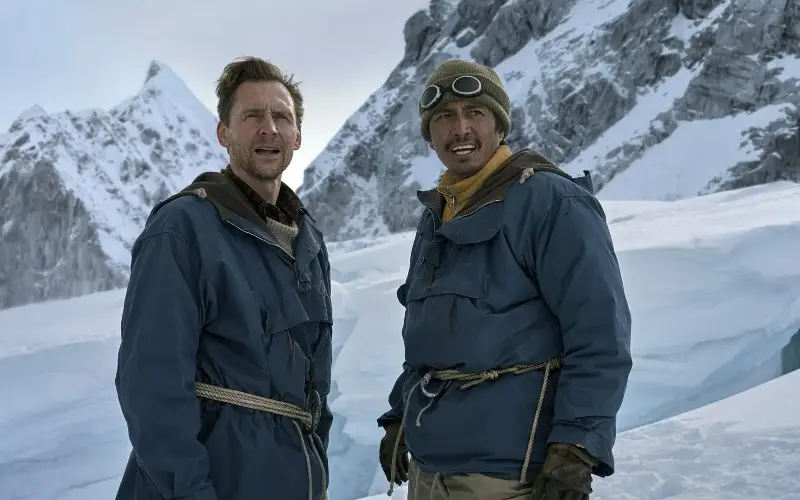
With the Tibetan actor Genden Phuntsok as Tenzing Norgay and Tom Hiddleston as Sir Edmund Hillary, this handsome historical drama about the 1953 ascent of Everest is made in polite, conservative period-piece style. But on the big screen, its vast backdrops are wondrous: the snowfields are stark and alien, the climbers’ ascent looks physically and sometimes even geometrically impossible, the mountains themselves resemble enormous curtains of rock dropping through cracks in the sky. The scale of the achievement is felt through the scale of the screen. However huge your television may be, trust me: it is not big enough.
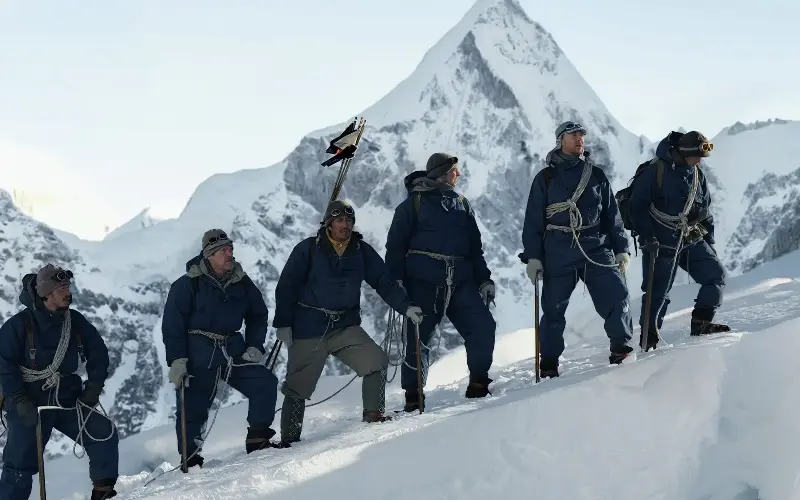
Director Jennifer Peedom knows this terrain. The Australian filmmaker has made a pair of documentaries about Everest and the various people who live around or flock to it, and her fidelity to history, culture and (above all) nature glints in every frame. Tenzing was filmed on location in Nepal and also on New Zealand’s South Island: Phuntsok and Hiddleston’s mountaineering scenes were shot exclusively on the latter, though Everest itself could hardly have looked grander or more gruelling than the landscapes seen here.
Against such scenery, perhaps it is inevitable that the performances should feel understated. Phuntsok makes a suave Tenzing, while Hiddleston adds only the lightest of New Zealand twangs to the Auckland-born Hillary’s dialogue. And as expedition leader John Hunt, Willem Dafoe gives another airing to his one-size-fits-all heritage accent, which is as enjoyable in Nepal as it was in 1830s Germany (Nosferatu), 1890s New England (The Lighthouse) and elsewhere.
Unlike the men it describes, Luke Davies’s screenplay rarely strays from the well-trodden path. The most imaginatively staged scene is the one on the summit, during which a judiciously timed cut suggests the adult Tenzing is looking down on his younger self at the foot of the mountain, reassuring him that this pinnacle will one day be within his reach.
Otherwise, you’ve seen this routine before. Naturally, the ascent doubles as a spiritual quest, and is intercut with formative episodes from Tenzing’s childhood and early married life. Then, at a pivotal moment, a vision of Tenzing’s late wife turns up to offer her widower some ghostly encouragement. Yet, whenever the clichés start to pile up in drifts, suddenly the landscape opens up again and the tropes melt away, leaving behind what is literally peak cinema.
In cinemas from October 9 and on Apple TV from October 16