



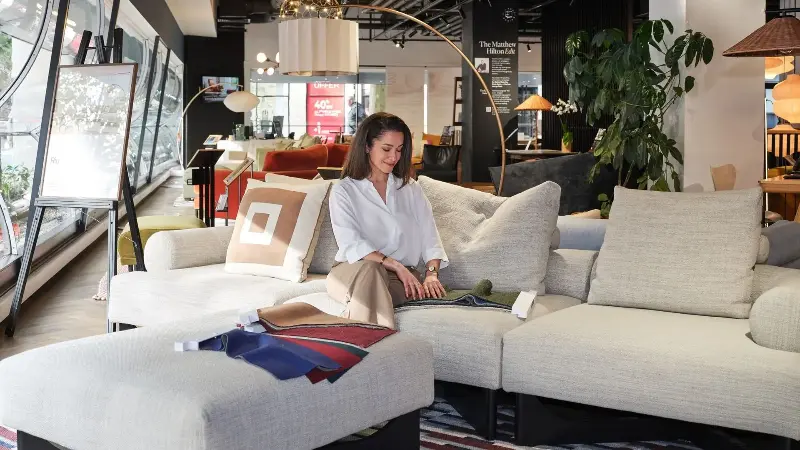
A sofa is one of the most significant and personal investments you can make for your home, and choosing the right one is rarely as simple as spotting something and buying it. After eight years in interior design consultancy — much of it guiding clients through furniture showrooms — I’ve become especially particular about sofas.
Heal’s stands out for the abundance of choice on display at its flagship store on Tottenham Court Road — its own and some from iconic brands, too. Contemporary silhouettes sit alongside timeless classics, from modular to compact, making it easy to imagine each sofa in a variety of homes. In an era when so much furniture shopping happens online, being able to feel the upholstery, compare seat heights and depths, and actually sit on each sofa makes all the difference; it’s an experience you simply can’t replicate on a screen.
But that involves finding the time to go in-store. So, I did it for you. The hands-on experience has honed my eye for the details that matter, from proportion to seat depth, cushion fill, upholstery, and silhouette. Still, comfort is always subjective. What feels perfect to one person may not to another. My real test is always this: can I picture myself or a client truly living with and sitting on this sofa every day?
Below are some of the best sofas from Heal's own range. I’ve rated them from soft to firm based on how they felt when I tested them in-store. Armed with this information, you can now confidently order online.
Rio
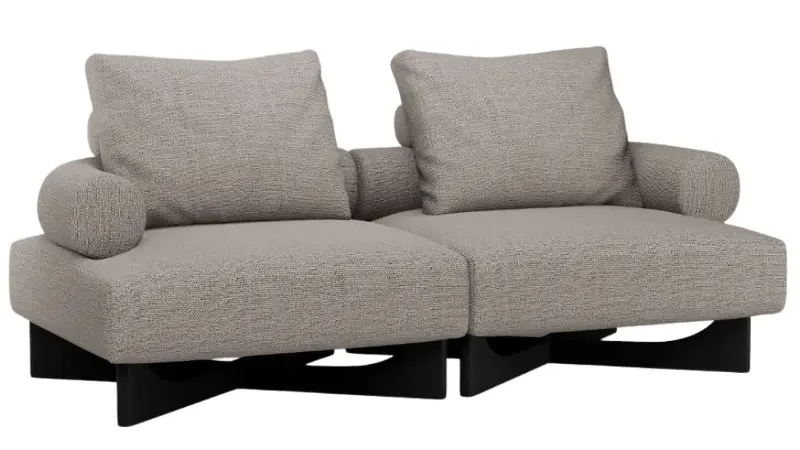
I first saw the Rio sofa at Heal’s Modern Heirloom launch earlier this year, and it was one of those sofas you notice before you even think about sitting on it. In the showroom, it sits near a window, so you really see the fabric's texture and tonal variation in natural light, which makes such a difference on something this sculptural. Nathan Yong, the Singaporean designer behind it, channels Brazilian design from the 1950s — a big move away from the old, heavy, formal shapes and toward something lighter and almost organic.
What really wins me over is the sense of movement: those curved arms and back mean this isn’t a sofa you shove up against a wall and forget. The Rio is meant to be seen from every angle, especially if you’ve got an open-plan space where it can float in the middle of the room. It also nails the dual-aspect, sculptural sofa trend we’re seeing right now, where the back of the piece matters almost as much as the front.
The Rio’s movable back cushions are genuinely versatile. You can shift and adjust them to suit your preferred way of sitting instead of being locked into one posture. They do require occasional plumping; the feather-and-spring filling is much softer and more inviting than the rigid, uniform cushions of most sofas.
What really ties these features together is the sense of balance the Rio achieves. The black legs, for example, visually anchor the sofa while lifting it 20cm off the ground. This gives the whole piece a lightness that offsets its generous proportions, so it doesn’t feel bulky even in the middle of an open space. (Natural ash legs are also available, but the black finish adds extra definition and presence.)
Altogether, if you’re looking for a statement sofa that can float in the center of a room, the Rio is well worth considering.
RATING: MID-FIRM
Supportive foam seat with softer spring-feather back cushions. You sit in it slightly, but you don’t sink.
Matera
While many of Heal’s sofas are made in the UK, some collections are produced in southern Italy. The Matera sofa, named after the city where it’s made, is one such example from Heal’s longstanding Italian manufacturing partner.
If you need a compact sofa but don’t want your space to feel like you’ve chosen the 'small sofa option,' the Matera is ideal. The narrower arms, streamlined cushions, and raised legs keep the whole structure visually light. Helen Belcher, Heal’s senior design consultant, told me, “It’s one of our bestsellers, particularly with customers living in London flats. They tend to gravitate towards it because of the slim frame.” That slim silhouette is exactly why the Matera works so well in smaller spaces.
The slimmer seat cushion made me expect something much firmer, but the mix of high-density PU foam, memory foam, and feathers gives it proper support with just enough softness to settle into.
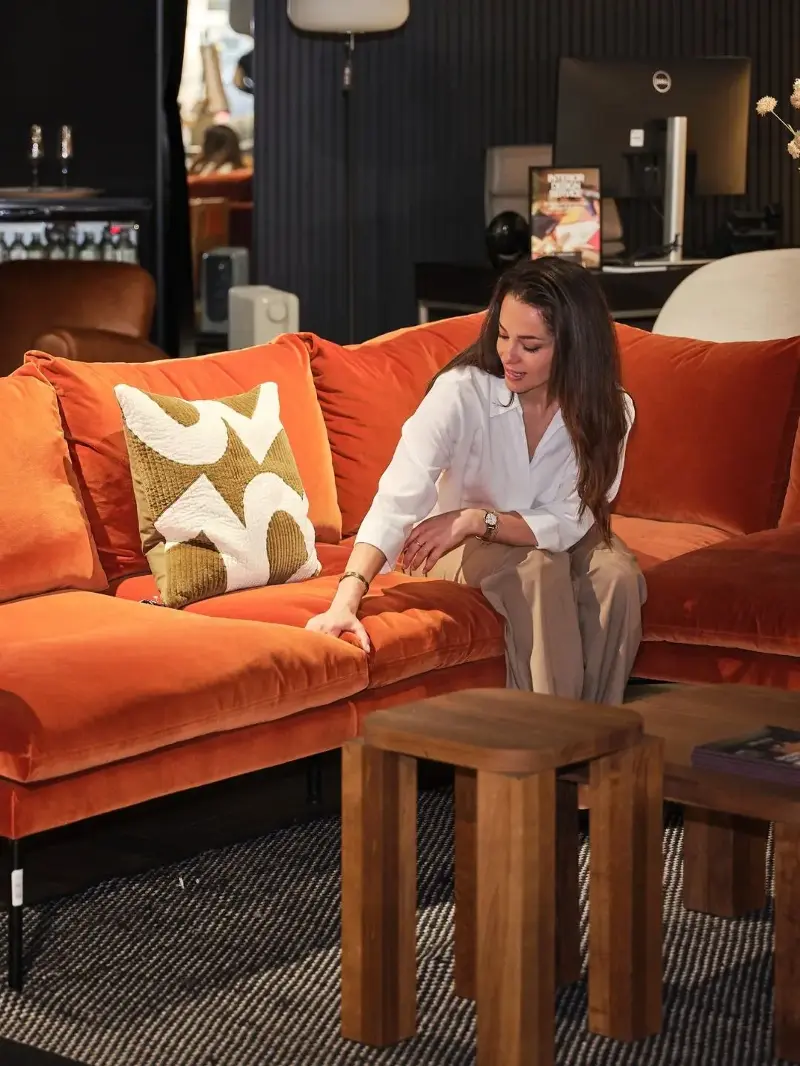
I'd say the upholstery changes its character quite dramatically too. In the showroom, it was displayed in this gorgeous and bold Nobilis Velvet Mustard. A thick 100% cotton Italian velvet, which looked beautiful but, admittedly, was already showing some lightening in the busiest areas. For children or pets, I’d personally choose something more forgiving. In leather, the same sofa reads much sharper and more tailored (as you can see with the leather option).
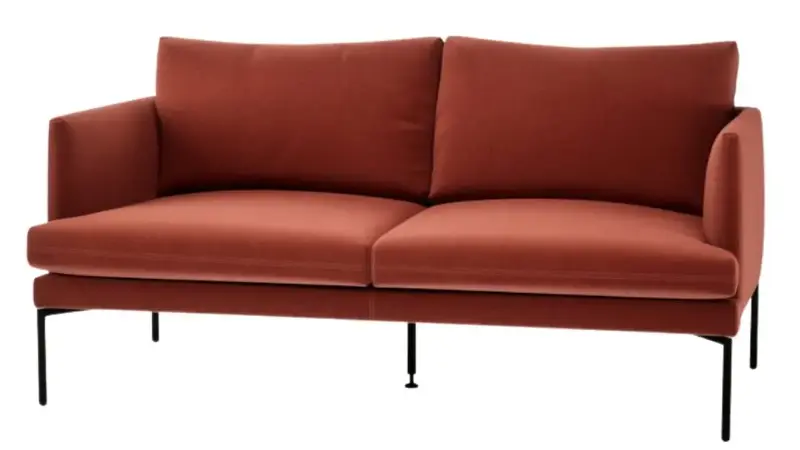
RATING: MEDIUM
This sofa has more give than its slim profile suggests. Memory foam, high-density foam, and feathers create a balanced sit.
Hepburn
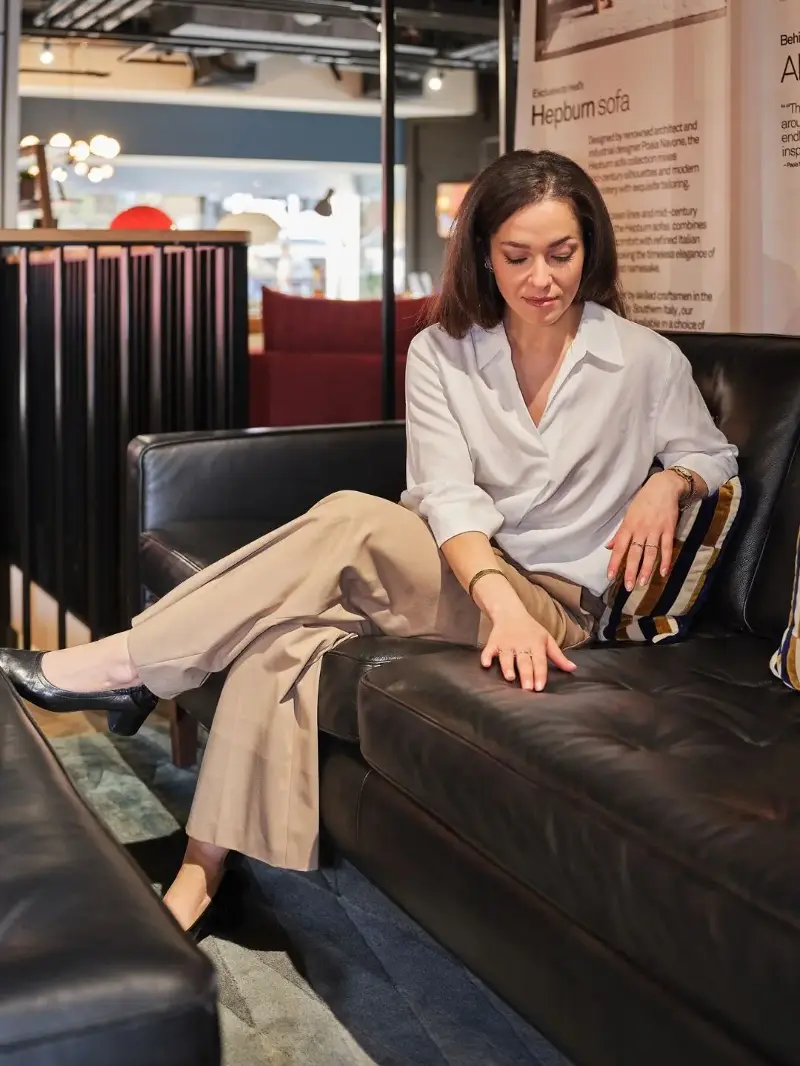
The Hepburn sofa is probably the clearest mid-century reference of these sofas, but what I like is that it doesn’t feel like it’s trying to recreate a period room. Designed by Paola Navone, it takes that familiar buttoned upholstery, slim legs, and more structured silhouette and makes them feel very current.
And can we bring button tufting back, please? I think we became so obsessed with completely seamless upholstery that we forgot how much character a small detail like this can add. On the Hepburn, the buttons break up the leather beautifully and give the sofa just enough rhythm.
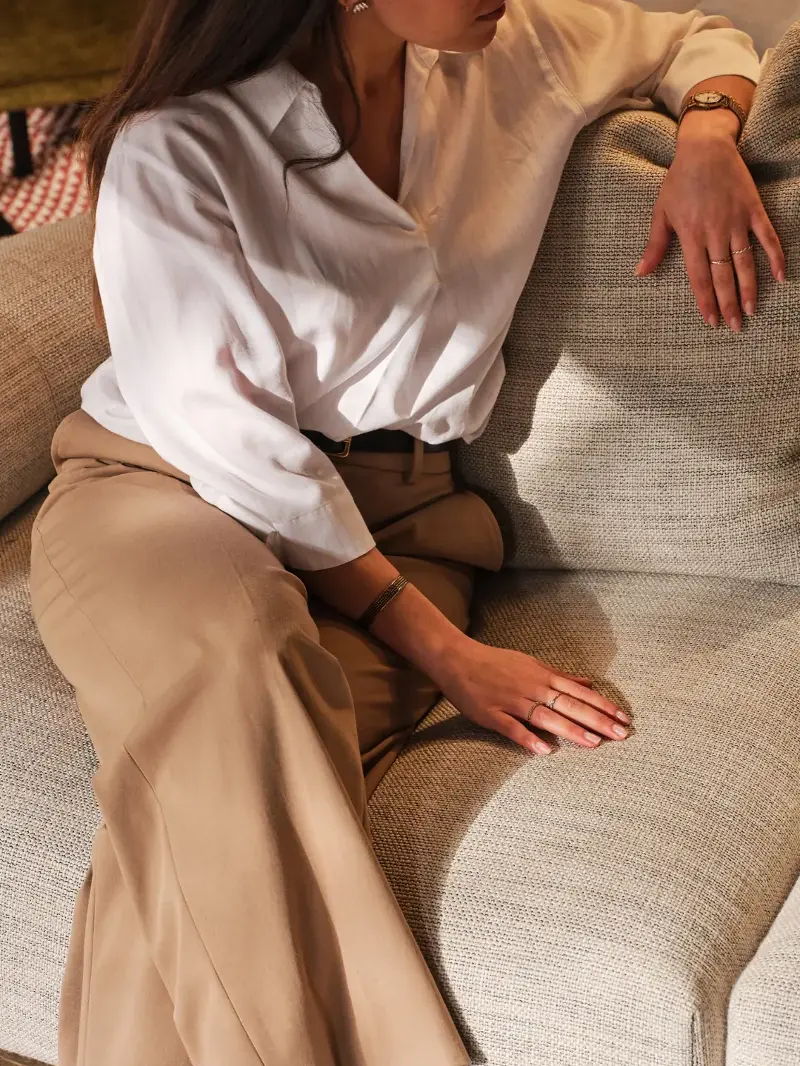
The style I tried was in coated leather, and this particular Hepburn has been on the showroom floor longer than the others I tested. For me, that made it even more useful to review because you can actually see how the material behaves after repeated use in a busy environment. The leather has started to develop that gorgeous lived-in character you want from a sofa like this. There’s a slight sheen across the surface, some creasing, light scratches, and the beginnings of a patina, all of which you can see more clearly in the second image. Rather than making it look worn out, I think it proves the opposite.
Helen made a really good point when we spoke about leather: the finish matters enormously. This coated leather is one of the more durable options, so it gives you that extra protection while still allowing the surface to change naturally over time. The more it is used, the more it stretches, softens, and develops that subtle shine.
On the Hepburn, I think that ageing process is part of the appeal. The sofa is already quite tailored and structured, so the marks of use stop it from feeling too perfect. It gains character rather than simply showing wear.
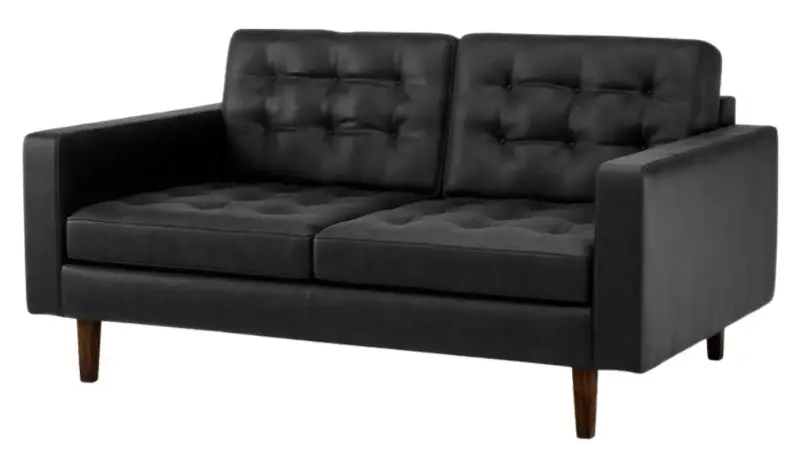
RATING: MID-FIRM
More structured and supportive, particularly in leather, with less of that sink-in feeling.
Cavo Modular Sofa

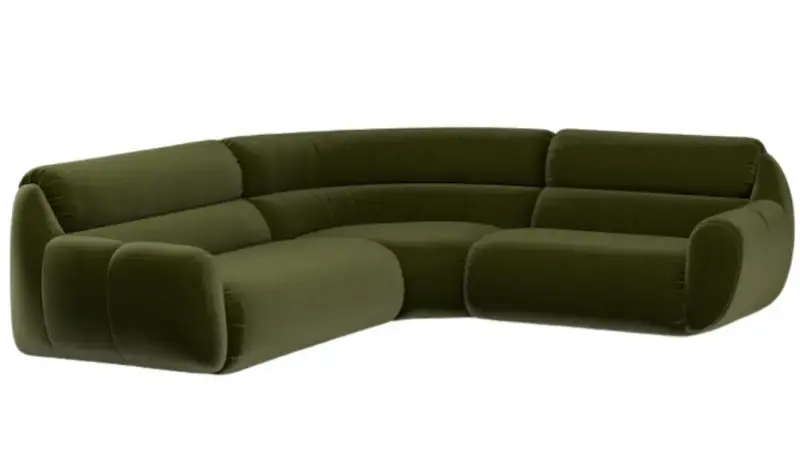
With the Cavo sofa, the experience came before the analysis. I sat down and sank into it immediately. I have a real soft spot for low-slung sofas, especially when they have this much depth and such a high, enveloping back. With its 39cm seat height and 100cm depth, it has that cool 1970s conversation-pit feeling. One thing I'd point out, though, is that a seat this low isn't for everyone. From my experience working with clients, getting up from a sofa at this height can take a little more effort, particularly with such a deep seat. It's definitely something I'd recommend testing in person.
Designed exclusively for Heal’s by Danish studio Says Who, the Cavo is a really good example of Scandinavian simplicity meeting everyday function. The fixed foam cushions give it more support than you might expect, so although it feels cocooning, it never becomes floppy or shapeless. I’d rate the sit as medium. There’s definitely some firmness there, but not in a rigid way. You can see in the images how much the back gives when I lean into it.
The modularity is another big part of the appeal. With six interchangeable modules, you can make it feel intimate or much more expansive depending on the room. I also really loved it in the Evergreen cotton velvet. That deep green anchors such a generous sofa beautifully. In bouclé or a linen-cotton, I think it would read softer and a little more relaxed.
RATING: MEDIUM
There’s a surprising amount of support to it, but it doesn't feel firm. That softness is what keeps the Cavo feeling cocooning, while the fixed foam cushions stop it from becoming overly sink-in.
Rafi
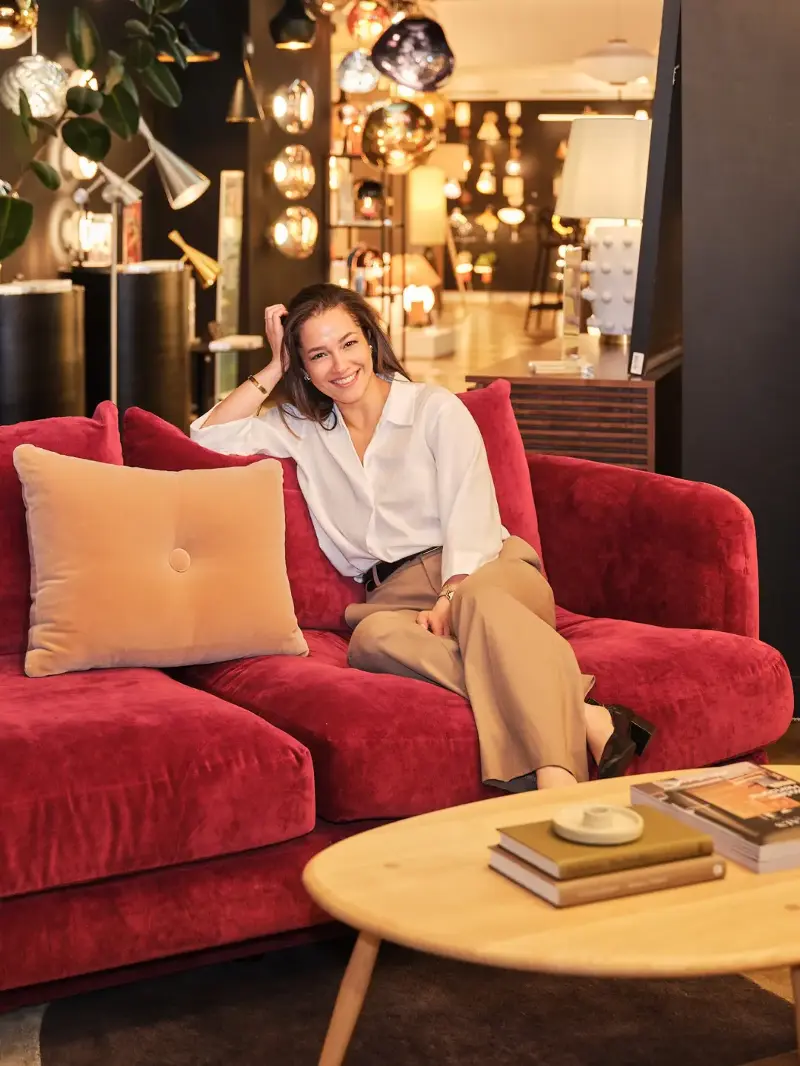
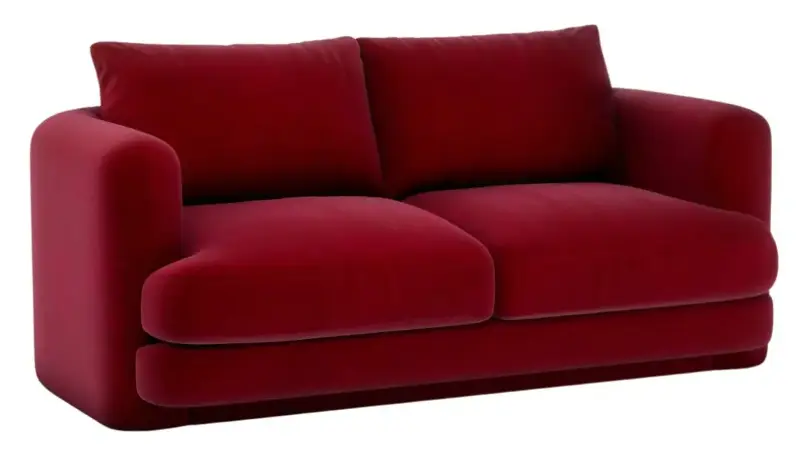
If the Cavo is the sofa I’d sink into and stay there, the Rafi sofa feels a little more composed. When I spoke to Heal’s senior design consultant Helen Belcher about which sofas I should really focus on, I immediately gravitated towards it. Designed exclusively for Heal’s by Adam Doran, it sits low to the floor, with arms that wrap around the back and continue down to frame the sofa at almost the same width throughout. It’s a small detail, but visually it makes such a difference, giving the Rafi a slightly glamorous, almost Art Deco character.
At 100cm deep, this is a generous sofa. At 5ft 2in, if I want to sit upright with my feet on the floor, I need a cushion behind me. If you’re taller, I actually think you’ll love that depth. Personally, I’m quite happy curling my legs up, and for that, the Rafi is incredibly comfortable. The feather-wrapped foam back cushions have that lovely softness where they almost hug you, but still bounce back. I also noticed the slight curve at the front of the seat cushion. Your legs fall over it more naturally instead of meeting a hard straight edge, and it genuinely changed how comfortable the seat felt.
The sofa I tried was upholstered in the Smart Lux velvet, which gives you that rich cotton velvet look but in a stain-resistant synthetic fabric woven in Italy. For an everyday living room, especially with pets or children, this is probably where I’d lean. There are more natural-looking options too, including broad weaves, brushed cottons, and the Capello linen cotton, but I’d think carefully about how heavily the sofa will be used.
RATING: SOFT
The most relaxed of the five, with feather-wrapped foam cushions that mould around you.
I’d seriously recommend visiting Heal’s flagship store if you’re considering one of its sofas. Having a full floor dedicated to seating means you can compare different styles, depths, and upholstery options side by side rather than trying to imagine them from a screen. And if you can, speak to one of the design consultants. Helen was brilliant at taking the conversation beyond what simply looks good and into how you actually live, sit, and use the room. When you’re making this kind of investment, that practical guidance is incredibly valuable.
If you're looking for something more affordable, there are some solid IKEA sofas worth considering, too.
For more shopping advice and all the latest design news, subscribe to the Livingetc newsletter.